Lesson plan
Learners produce electricity in three way, turning a dynamo, catching light with a solar panel, and using a dry cell then send it to a bulb and a buzzer. They compare what each source can do and explain where electricity comes from.
🎯General objective
By the end of this lesson, learners can describe how electricity is produced, produce it themselves using a dynamo and a simple solar panel, connect each source to a bulb and to a buzzer, and explain that electricity can come from movement, from light, or from the chemicals inside a cell.
✅Specific objectives
By the end of the lesson, learners should be able to:
- Describe how electricity is produced.
- Produce electricity using a dynamo and a simple solar panel.
- Connect a source of electricity to a bulb and to a buzzer, and make each one work.
- Compare the three sources and say what each one needs before it will make electricity.
🧰Teaching and learning materials
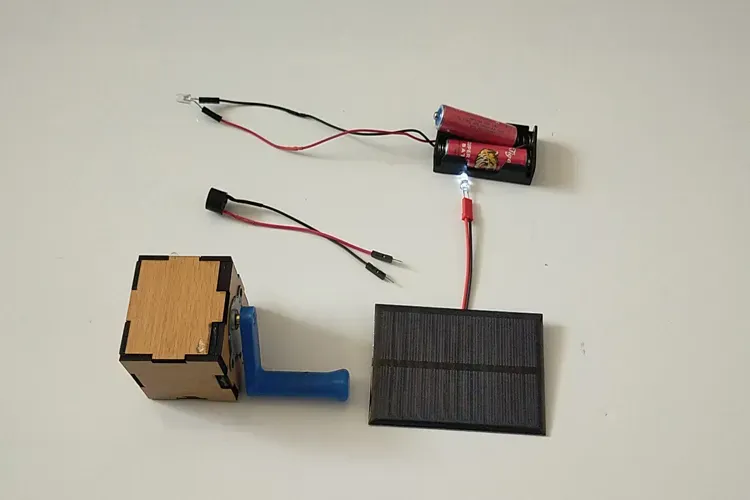
- Dynamo with a handle to turn it.
- Mini solar panel 6 V.
- Dry cells with holders.
- Bulb (LED) and a 5v buzzer.
- Wires.
📐Lesson steps 80 min in total
-
1
Recall and safety
Ask where the electricity in a torch, a radio and the classroom lamp comes from. Agree the rules: dry cells only and never a wall socket, never join the two ends of a cell straight to each other, and tell the teacher at once if anything gets warm.
-
2
Three sources
Show the dynamo, the solar panel and the dry cell one at a time. Ask what each one might need before it will work. Write the class predictions on the board without saying who is right.
-
3
Light the bulb
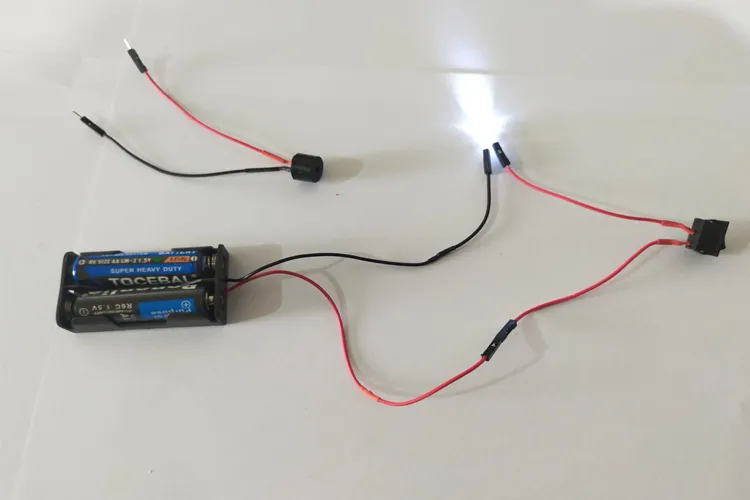
Groups rotate through the three stations and connect each source to the bulb. They turn the dynamo by hand, hold the panel to the sun or a bright torch, and fit the dry cell. Each group records whether the bulb lit, and how brightly.
-
4
Sound the buzzer
Groups repeat at each station with the buzzer in place of the bulb. If the buzzer stays silent they swap the two wires round and try again before calling the teacher.
-
5
Change one thing
At each station groups change one condition and watch what happens: turn the dynamo faster then slower, shade the panel with a hand then uncover it, use one dry cell then two. They record each change.
-
6
What we found
Groups report back and the class builds the conclusion together: a dynamo makes electricity from movement, a solar panel from light, a dry cell from the chemicals inside it. Go back to the predictions on the board and check them.
-
7
Pack away
Disconnect every cell, count the pieces back into the box, and each learner names one thing at home powered by each of the three sources.
📝Assessment
- Practical
- Every learner must light the bulb from the dynamo and from the solar panel with their own hands. Watching a groupmate do it is not the same thing, and doing it is the objective of this lesson.
- Spoken
- Ask each group what their source needed before it would make electricity. Listen for movement at the dynamo, light at the panel, and the chemicals inside at the dry cell.
- Written
- Each learner fills in a small table the source, whether the bulb lit, whether the buzzer sounded, and what happened when they changed one thing.
- Buzzer
- A buzzer only works one way round. If it is silent, swapping the two wires usually fixes it. It may also stay quiet on the dynamo even while the bulb lights brightly, because a dynamo makes a different kind of electricity from a dry cell. Say that plainly rather than letting the class decide the buzzer is broken.
- Solar panel
- A small panel needs real sunlight or a bright torch held close to it. Under an ordinary classroom lamp it will often do nothing at all and the station stalls. Put that station by a window, or take the class outside for that part of the lesson.