Lesson plan
Learners build a working circuit from a dry cell, wires and a bulb, then add a switch to control it. They test what makes a circuit complete or incomplete, and explain in their own words why a lamp lights or does not.
🎯General objective
By the end of this lesson, learners can explain the methods of controlling an electric circuit, construct a simple electric circuit from a dry cell, wires, a bulb and a switch, manage that circuit safely, and tell the difference between a complete and an incomplete circuit.
✅Specific objectives
By the end of the lesson, learners should be able to:
- Explain methods of controlling an electric circuit.
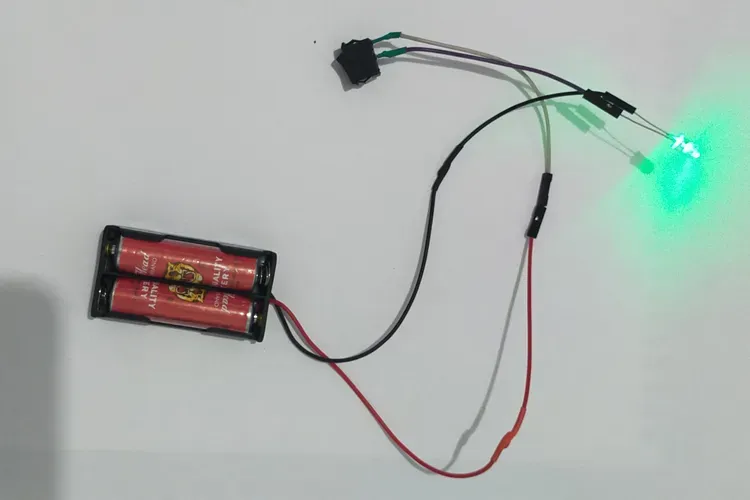
- Construct a simple electric circuit using dry cells, wires, a bulb and a switch.
- Manage an electric circuit and identify its positive and negative terminals.
- Accept and adapt to new technology by using safe and standard electrical tools and equipment.
🧰Teaching and learning materials
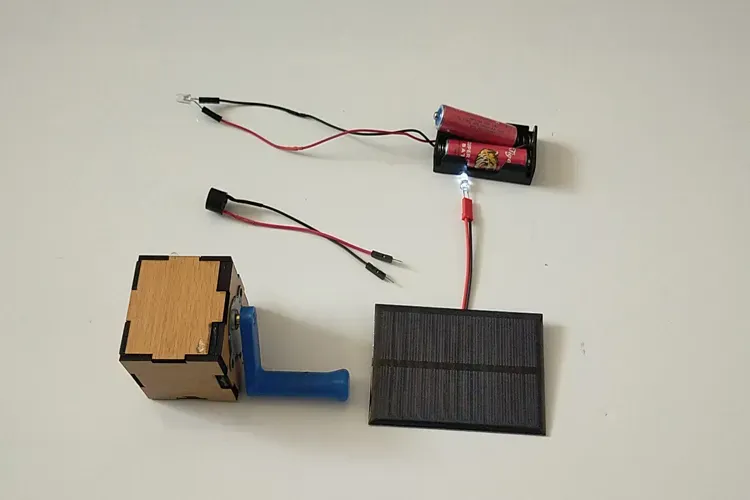
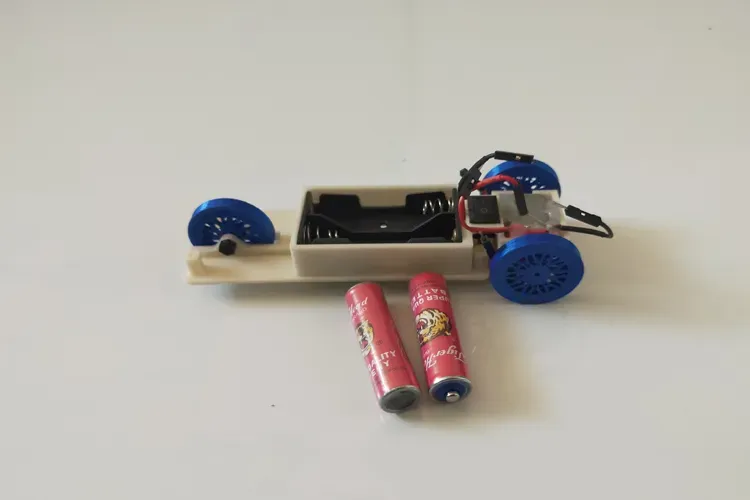
- Dry cells with a holder.
- Bulbs (LED), wires, and one switch.
📐Lesson steps 80 min in total
-
1
Recall and safety
Ask what the class remembers about how electricity is produced. Agree three rules for today: dry cells only and never a wall socket, hands and materials stay dry, and any wire that gets warm is reported at once.
-
2
Name the parts
Hold up the dry cell, wire, bulb and switch. Name each one and point out the positive and negative terminals. Learners repeat the names and find each part in their own set.
-
3
Build it
In groups of 2, learners connect cell, wires and bulb until the bulb lights. Do not show them the answer. Move between groups asking "what have you tried?" Every group must light a bulb before the lesson moves on.
-
4
Complete and incomplete
Groups remove one wire and watch what happens, then put it back. Give them the words complete circuit and incomplete circuit, and have each group show both to you.
-
5
Add the switch
Groups fit the switch and use it to turn the bulb on and off. Ask where they have seen switches at home and at school, and why a circuit needs controlling at all.
-
6
Explain it
Each group shows its circuit to another group and explains, in their own words, why the bulb lights and what the switch does.
-
7
Pack and close
Disconnect the cells, count every piece back into the box, and each learner names one switch they will look for before the next lesson.
📝Assessment
- Practical
- every group must light a bulb and then switch it on and off unaided. A group still stuck at the end of the build stage needs the teacher working beside them, not a finished circuit handed over.
- Written
- each learner writes or draws the answer to two questions, what makes a circuit complete, and name two ways of controlling a circuit and why control matters.
- Spoken check
- ask three or four learners to point to the positive and negative terminals on their own cell or bulb (LED). A learner who can build the circuit but cannot name the parts has copied a neighbour rather than understood it.
- Use the remedial period that follows Lesson 5 for any group that never lit the bulb, and for learners who could build but could not explain.