Lesson plan
Three ways to make electricity, two things to do with it, six combinations to try. Learners connect each source to each output and write the chain of energy forms and discover that electrical energy sits in the middle of every single one.
🎯General objective
Show how energy is converted from one form to another, and draw the chain of conversions for each source and output in the kit.
✅Specific objectives
By the end of the lesson, learners should be able to:
- Produce electricity three ways: from sunlight, from turning a dynamo, and from a dry cell.
- Connect each source to the LED and to the buzzer, and record what happens.
- Draw the chain of energy forms for each of the six combinations.
- Explain why electrical energy appears in the middle of every chain.
🧰Teaching and learning materials
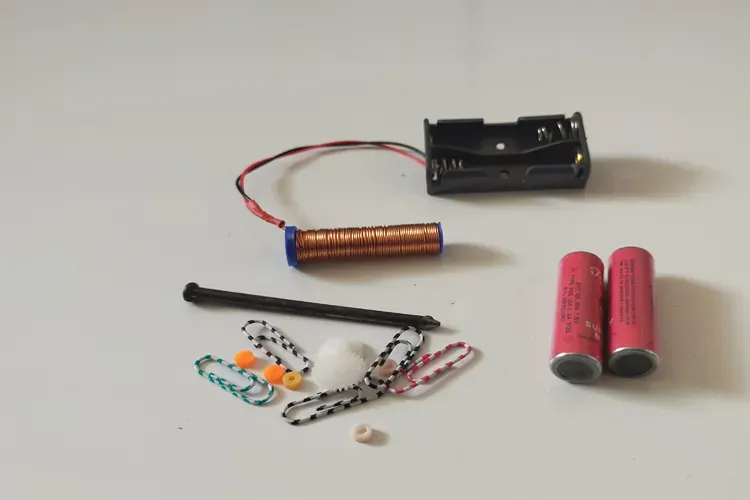
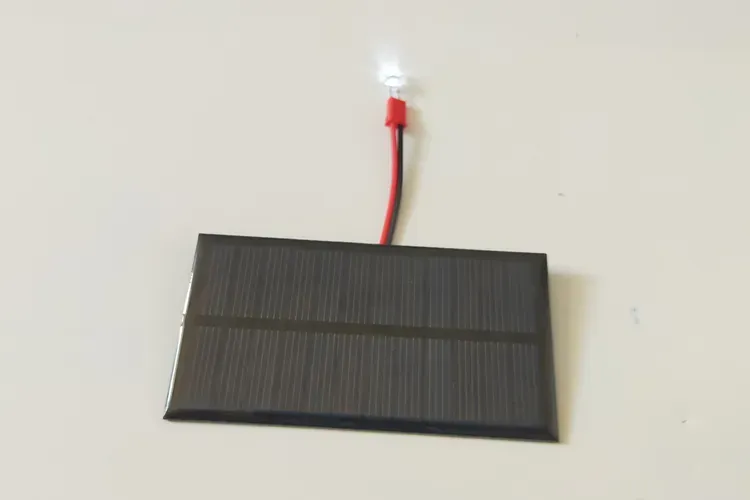
- Energy transformation kit per group: solar panel, mini dynamo, dry cells, LED, buzzer, wires.
- Sunlight, or a torch.
- Exercise books ruled into a six-row table before the lesson starts.
📐Lesson steps 40 min in total
-
1
Three in, two out
Lay the kit out in front of the class: on one side the solar panel, the dynamo and the dry cell; on the other the LED and the buzzer. Ask how many different pairings are possible. Six. That is the lesson the class is going to make all six and write down what each one does.
-
2
Fill in the six
Groups work through every combination: panel to LED, panel to buzzer, dynamo to LED, dynamo to buzzer, cell to LED, cell to buzzer. For each one they write what they did, what happened, and the chain of forms sunlight to electrical to light, muscle movement to electrical to sound, and so on. Keep them moving; six in twenty minutes is three minutes each.
-
3
What is always in the middle?
Collect the six chains on the board. Ask what everyone has in common. Electrical energy sits in the middle of all six, every time. Draw out why that matters: electricity is the go-between form. It is how we carry energy from wherever we got it to wherever we want to use it.
-
4
Where does the heat come from?
Have a group touch the LED after it has been on a while, and the dry cell after the buzzer has run. Both are slightly warm. Some energy escapes as heat in every conversion, whether we want it or not which is why no machine gives back everything you put in.
-
5
Write the rule
Each learner draws two complete chains in full, labels every form, and writes one sentence: every source we used became electricity first, and electricity became light or sound.
📝Assessment
- Practical task
- As the scheme asks the group produces electricity from all three sources and drives both outputs.
- Drawing
- Which is this lesson's stated objective, six chains written as arrow diagrams with every form named.
- Oral
- Why does electrical energy appear in all six chains? Where did the energy in your arm come from before you turned the dynamo?
- Group discussion
- Which of the three sources would still work in a school with no electricity and no money for batteries?